About Receipt and Release with Waiver
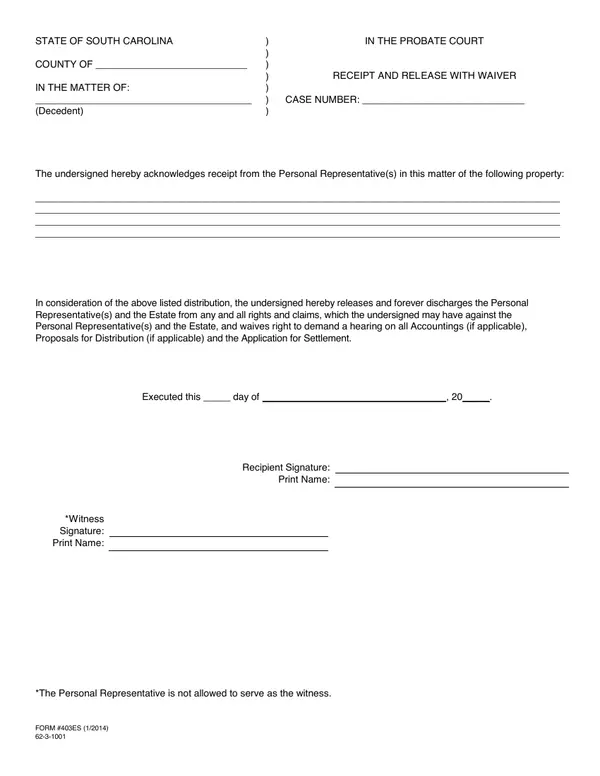
A recipient acknowledges receipt of estate property from the Personal Representative and releases all claims against the estate and Personal Representative in exchange for the distribution.
When you'd use it: Filed when a beneficiary or heir receives their distribution from the estate and wishes to waive the right to object to accountings, proposals for distribution, and settlement applications.
Where to get the official form
The official version of Receipt and Release with Waiver is published as a PDF by the South Carolina courts. We checked this link and it resolved to a form on an official court or government website — always download the current version directly from the source rather than a third-party copy:
Download Receipt and Release with Waiver (PDF) →
Source: sccourts.org
Link last checked: May 30, 2026
How to file Receipt and Release with Waiver in South Carolina
- Step 1 — Confirm you have the correct formUse Receipt and Release with Waiver (403ES) when filed when a beneficiary or heir receives their distribution from the estate and wishes to waive the right to object to accountings, proposals for distribution, and settlement applications. Double-check it's the right form for your situation — South Carolina probate forms are revised periodically, so verify the name and number against your court's current form list before you start.
- Step 2 — Complete every required fieldFill out Receipt and Release with Waiver carefully and review it for errors before filing. Probate cases can already take months — a small mistake on the form can set your timeline back further.
- Step 3 — Get it notarized or witnessed if requiredSome probate forms must be signed in front of a notary or witnesses. Check the instructions on the form itself, and arrange notarization before you file if it's required.
- Step 4 — File it with the correct courtSubmit Receipt and Release with Waiver to the probate court or county clerk handling the estate — usually in the South Carolina county where the deceased lived. Ask the clerk how they prefer to receive filings (in person, by mail, or e-filing).